Basement Waterproofing NJ Advice for Preventing Recurring Water Problems

Water in a basement rarely starts as a dramatic flood. More often, it begins with a damp corner, a faint musty smell, a line of white mineral residue on the wall, or cardboard boxes that feel soft on the bottom. Homeowners across New Jersey see these early signs every year, then hope the problem will stay minor. It usually does not. Once moisture finds a reliable path into a basement, it tends to return with every heavy rain, spring thaw, or humid stretch of weather unless the real cause is identified and corrected.
That pattern is especially common in New Jersey because local conditions create pressure on below-grade spaces from several directions at once. Older housing stock, clay-heavy soils in many areas, fluctuating water tables, coastal storm systems, freeze-thaw cycles, and aging drainage infrastructure all play a part. A basement can stay dry for years, then suddenly begin taking on water after one landscaping change, one cracked discharge line, or one season of unusually wet weather.
The good news is that recurring basement water problems are usually preventable. The harder truth is that prevention works only when it is based on diagnosis, not guesswork. I have seen homeowners spend thousands on a dehumidifier setup, fresh paint, and a sump pump replacement, only to keep getting seepage because the grading outside still pitched water toward the foundation. I have also seen the opposite: a homeowner assumed the entire foundation needed excavation when the actual problem was a disconnected downspout extension dumping roof runoff beside the house.
Basement waterproofing is not one single repair. It is a system of decisions that manage water before it enters, relieve pressure when it builds, and control moisture after the fact. If you are thinking about Basement Waterproofing NJ services, or trying to stop a problem that keeps coming back, it helps to understand how water behaves around a house in the first place.
Why recurring water problems happen
Many people think water enters a basement because there is a hole somewhere in the wall. Sometimes that is true, but more often water gets in because the conditions around the foundation keep forcing it inward. Concrete and masonry are durable, but they are not magical barriers. They can absorb moisture, transmit vapor, and develop cracks over time. Once surrounding soil becomes saturated, hydrostatic pressure increases. That pressure pushes water through weak points such as wall cracks, cove joints where the floor meets the wall, pipe penetrations, porous block walls, and old patch repairs.
In New Jersey, recurring problems often trace back to surface water mismanagement. Gutters overflow. Downspouts discharge too close to the home. Flower beds are built up against siding and foundation walls. Patios settle and direct runoff toward the structure. Asphalt driveways crack along the foundation edge and let water collect. During long wet periods, all of that water soaks the soil beside the home, and the basement starts acting like the release point.
There is also the issue of hidden moisture. A basement can feel dry underfoot while still carrying damaging levels of humidity. That moisture may come from seepage, condensation on cool surfaces, uninsulated pipes, poor ventilation, or a combination of all four. Recurring water problems are not only about puddles. They also include mold growth, rotting framing, rusty columns, stained finishes, and that stale smell that never seems to leave.
The New Jersey factor
Basement issues in New Jersey are shaped by geography and construction history. A house in Bergen County may deal with entirely different conditions than one in Monmouth, Camden, or Morris County, but a few patterns show up again and again.
Older homes often have stone or block foundations, and many were built before modern waterproofing membranes were standard practice. Some neighborhoods have heavy soils that hold water rather than letting it move freely away. In lower-lying areas, stormwater can linger around foundations long after a rainfall ends. Near the coast, wind-driven rains and high groundwater add another layer of complexity. In winter, freeze-thaw cycles widen small cracks and shift surfaces that were once draining correctly.
That is why Basement Waterproofing NJ work cannot be approached as a cookie-cutter service. A repair plan that makes sense for a newer poured-concrete foundation in one township may be incomplete or excessive for an older block foundation elsewhere. Good waterproofing starts with the site, the structure, and the pattern of failure.
Start outside before you do anything inside
Homeowners understandably focus on the basement because that is where they see the water. But the first inspection should almost always happen outdoors. The exterior determines how much water the basement has to resist.
Walk the perimeter during or just after a rain if possible. That timing tells you more than a dry-day inspection ever will. Look for overflowing gutters, splash marks on siding, pooled water near steps, eroded mulch channels, and downspout discharge points that dump water right back toward the foundation. Watch whether the ground slopes away from the house for at least the first several feet. If it does not, you are feeding the problem.
One of the more common scenarios I see is a homeowner who installed a nice paver patio or widened a driveway without realizing they created a shallow bowl against the foundation. The basement stayed dry for years, then started leaking after the first season of hard storms. The foundation did not suddenly fail. The drainage pattern did.
Roof water matters more than most people expect. A modest section of roof can shed hundreds of gallons in a serious rain. If even part of that volume is discharged too close to the house, the soil around the foundation becomes saturated quickly. Once that soil is soaked, water finds every vulnerable spot below grade.
Small cracks are not always small problems
A hairline crack in concrete is not automatic proof of structural danger, but it should never be ignored if the basement has a history of moisture. Water rarely needs a large opening. It uses repeated pressure and time. What begins as a thin crack can widen through seasonal movement, settlement, or freeze-thaw expansion.
Vertical and diagonal cracks are common in poured concrete foundations. Some are mostly shrinkage related, others are tied to settlement or lateral stress. Horizontal cracking is more concerning and deserves prompt evaluation because it can indicate pressure from outside soil or water. In block foundations, the pattern may appear as stair-step cracking or seepage through mortar joints and hollow cores.
The mistake many people make is sealing visible cracks from the interior and assuming the issue is solved. Crack injection can be an effective part of a repair strategy, but it works best when the crack is the actual entry point and not just one symptom of a larger drainage problem. If surrounding conditions remain unchanged, water pressure may simply migrate to the next weakest area.
Waterproofing is not the same as water management
This distinction matters. People often use the term waterproofing to describe any basement water repair, but there are two broad categories of solutions. One tries to stop water from contacting or penetrating the exterior foundation. The other manages water after it reaches the foundation by collecting it, redirecting it, and pumping it away safely.
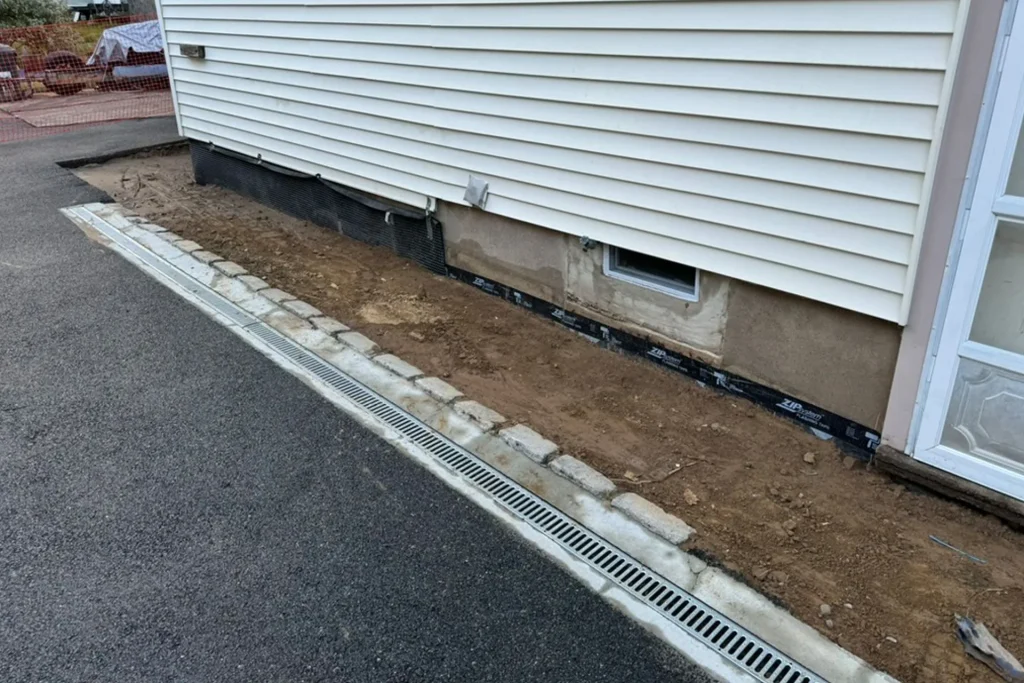
Exterior waterproofing usually involves excavation to expose foundation walls, repair defects, apply a waterproof membrane, install drainage board, and improve footing drainage. That can be the most direct fix for certain chronic issues, especially when exterior access is practical and wall conditions warrant it. It is also disruptive and relatively expensive.
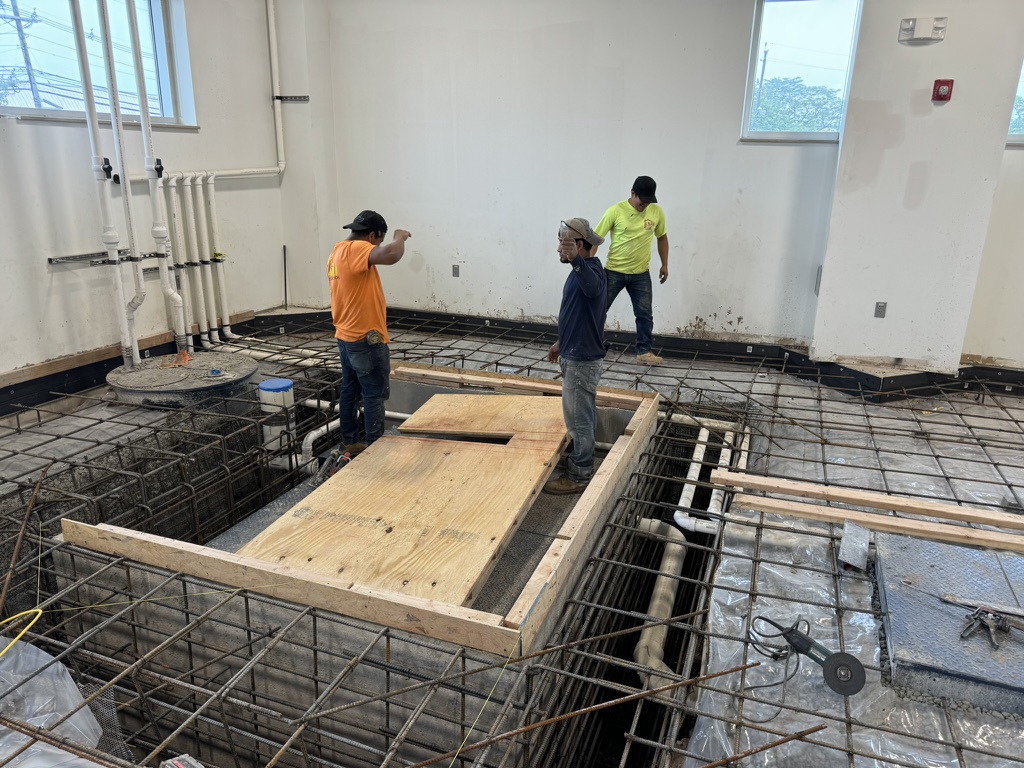
Interior water management systems typically rely on perimeter drains, sump basins, sump pumps, wall channels, vapor barriers, and controlled drainage paths. These systems do not stop water from entering the outer face of the wall. Instead, they keep it from reaching the finished basement space. In many New Jersey homes, especially where excavation is difficult due to tight lots, porches, utilities, or mature landscaping, interior systems are a practical and durable solution.
The right choice depends on the source of water, the construction type, access limitations, and the homeowner’s goals. If the basement will remain unfinished storage space, one level of protection may be appropriate. If the basement is being converted into living space with flooring, drywall, and furniture, the standard should be higher.
The fixes that prevent repeat failures
When recurring water is the issue, isolated repairs rarely last. Prevention comes from treating the basement as part of a full drainage system. The strongest plans usually include several coordinated measures rather than one dramatic product.
Here are the most common preventive upgrades that actually make a difference:
- Correcting grading so soil slopes away from the foundation rather than trapping runoff beside it.
- Extending downspouts far enough to discharge roof water well away from the house.
- Installing or repairing footing and perimeter drains where groundwater buildup is the main issue.
- Sealing significant cracks and penetrations after pressure sources are understood.
- Adding a properly sized sump pump system with a dependable discharge route and backup power option.
Notice what is not on that list: waterproof paint as a standalone cure. Coatings have their place, but they are often oversold. Paint does not relieve hydrostatic pressure. If pressure continues behind the wall, coatings can blister, peel, or fail while the real moisture problem gets worse out of sight.
Sump pumps deserve more respect than they get
A sump pump is easy to ignore when it is working and easy to blame when it is not. In many New Jersey basements, especially those with interior drainage systems or naturally high groundwater, the sump setup is the heart of water control. If it fails during a storm, everything else can fail with it.
Not all sump systems are equal. Basin size, pump capacity, switch reliability, check valve quality, discharge routing, and backup protection all matter. I have seen beautifully finished basements protected by a bargain pump plugged into an overloaded power strip. That is not protection. That is optimism.
Battery backups are worth serious consideration in areas prone to power outages during storms, which is not rare in New Jersey. Water problems often arrive at the exact moment electrical service becomes unstable. A backup pump or water-powered backup can be the difference between a routine event and a major insurance claim. The discharge line also needs attention. If it freezes in winter, clogs, or terminates too close to the foundation, the system can short-cycle or send water right back toward the house.
Testing matters too. Pour water into the basin and confirm the pump activates, discharges, and shuts off correctly. Do this more than once a year. Homeowners are often surprised by how many failures are discoverable before an emergency, whether it is a stuck float, a failed battery, or a loose fitting.
Humidity control is part of waterproofing
Not every basement moisture problem comes from liquid water entry. Some basements remain damp because humid outside air enters during summer and condenses on cool slab surfaces, ducts, pipes, or masonry walls. This is common in partially below-grade spaces that stay naturally cooler than the rest of the home.
A basement can therefore need two parallel strategies: keeping bulk water out and controlling airborne moisture. If you solve only one side of that equation, comfort and durability still suffer. Carpets feel clammy, stored belongings absorb odors, and mold finds enough moisture to keep growing on framing, drywall paper, and dust.
A dedicated dehumidifier can make a significant difference, especially if it drains automatically and is sized for the space. But it should be viewed as support, not rescue equipment. If the basement is routinely taking in liquid water, no dehumidifier will compensate for poor drainage. On the other hand, if water intrusion has been corrected and the space still feels damp, humidity control may be the missing piece.
Finished basements raise the stakes
A recurring leak in an unfinished utility basement is frustrating. In a finished basement, it becomes expensive quickly. Insulation gets saturated. Baseboards swell. Luxury vinyl flooring cups at the seams. Drywall can wick moisture several inches upward even when the visible water line seems minor. Built-in cabinets trap moisture in hidden cavities where mold can establish itself before anyone notices.
That is why waterproofing should come before finishing, not after. If you are planning a renovation, it makes sense to inspect the full basement envelope first. Look for prior patching, discoloration behind stored items, damp spots near wall-floor joints, and signs of seasonal moisture. A contractor who only talks about framing and flooring without asking about water history is skipping the most important question in the room.
I once walked through a recently finished basement where the owner had added recessed lighting, a media wall, and a small guest room. It looked excellent at first glance. Then I noticed a fresh coat of paint over one isolated section of foundation wall behind the utility area. That was the clue. The home had a prior seepage problem that was cosmetically covered rather than corrected. Two months later, after a long spring rain, water reappeared and damaged a newly installed laminate floor. The expensive part was not the leak itself. It was the cost of removing work that never should have gone in before drainage was addressed.
Warning signs homeowners should not brush off
Recurring water problems usually announce themselves early. The challenge is that the signs are easy to normalize, especially if they appear only in certain seasons.
Pay close attention if you notice any of the following:
- A persistent musty odor, even when no standing water is visible
- White chalky residue on masonry walls or floor edges
- Rust on metal posts, furnace bases, or appliance feet
- Peeling paint or bubbling wall coatings near grade level
- Dampness or staining after heavy rain, snowmelt, or hurricane season storms
None of these automatically means a major foundation failure. They do mean moisture is active in the space, and moisture rarely improves on its own.
When exterior excavation makes sense
Homeowners sometimes hear that interior systems are enough for every situation. That is not always true. There are cases where exterior work is the better long-term move, even if it costs more upfront.
If the foundation wall itself is deteriorating, if there is obvious exterior cracking and settlement, if water is entering through accessible wall sections that can be repaired from outside, or if an existing exterior drain has failed and can be replaced without extreme disruption, excavation may be warranted. It is also worth considering when a basement is being fully rebuilt as premium living space and the owner wants a belt-and-suspenders approach.
That said, exterior waterproofing projects need to be planned carefully. Excavation can affect walkways, plantings, decks, utility lines, and neighboring properties. Drainage details must be right, not approximate. Backfill selection and compaction matter. Membrane application quality matters. A rushed exterior job buried out of sight can fail quietly for years before anyone realizes the system was never installed correctly.
Choosing help without buying more than you need
The basement waterproofing industry includes excellent specialists and a fair number of aggressive sales operations. The difference often shows up in how the problem is diagnosed. If someone proposes a full system after a five-minute glance without discussing roof drainage, grading, wall type, storm patterns, and the exact location of water entry, be cautious.
Good evaluation is specific. It should account for whether the water appears at the wall, through the floor, at a penetration, or only https://zionjtkm764.quillnesty.com/posts/basement-waterproofing-nj-for-historic-homes-and-aging-foundations during certain weather conditions. It should separate seepage from condensation. It should identify what is urgent, what is optional, and what can be monitored. And it should explain trade-offs. Not every basement needs excavation. Not every damp smell requires a perimeter drain. Not every crack is structural. At the same time, repeated patching of the same area is often more expensive over five years than doing the right repair once.
For homeowners searching for Basement Waterproofing NJ contractors, local experience matters. New Jersey conditions vary enough that familiarity with regional soils, weather patterns, municipal drainage quirks, and older home construction can improve both diagnosis and repair planning. A contractor who understands how spring snowmelt behaves differently from a late-summer cloudburst will usually ask better questions.
Maintenance is what keeps a dry basement dry
The most successful waterproofing systems are not “set it and forget it” forever. They need occasional attention. That does not mean constant expense. It means routine observation.
Clean gutters before they overflow. Confirm downspout extensions stay connected. Regrade low spots that settle over time. Test the sump pump. Check discharge lines before winter. Keep basement storage elevated off the slab if the area has any prior history of moisture. Watch for changes after major landscaping or hardscaping work. A dry basement in one season is useful information, not a lifetime guarantee.
This maintenance mindset is where many recurring problems are prevented. Water follows conditions. If conditions change, performance changes. A basement that stayed dry for ten years can start leaking after a new garden bed, a clogged gutter line, or one broken splash block redirects runoff. Catching those changes early is far cheaper than replacing flooring, drywall, and stored belongings later.
The real goal is not just dryness
A properly protected basement is not merely one that avoids puddles. It is a space that stays structurally sound, healthier to occupy, and safe to finish or store belongings in over the long term. That requires more than a patch or a coating. It requires understanding where the water comes from, how it behaves on your property, and which combination of drainage, repair, and moisture control fits the house.
That is the practical side of Basement Waterproofing NJ work. The best results come from resisting the urge to look for a single miracle fix. Basements stay dry when the roof sheds properly, the ground slopes correctly, the foundation is sound, drainage paths stay open, pumps work when needed, and humidity is kept under control. When those pieces line up, recurring water problems stop being a yearly ritual and become a solved part of home ownership.
ARD Waterproofing
Address: 98 Smull Ave, West Caldwell, NJ 07006
Phone number: +12016465936
FAQ About Basement Waterproofing NJ
What is the best waterproofing method for a basement?
The best overall approach to waterproofing a basement is a combined exterior and interior system that stops water at the foundation wall and safely manages any moisture that gets through.
What is the average cost to waterproof a basement?
The average cost to waterproof a basement ranges from $2,500 to $15,000, with most homeowners paying around $5,200 for a complete project.
Can a basement be waterproofed from the inside?
Yes, a basement can be waterproofed from the inside, and it is often the most affordable and least disruptive method.